Over the past few weeks, Kanban boards became the dominant interface for AI agent orchestration. Developers figured out what many teams are still learning: when AI agents execute tasks in minutes, humans become the bottleneck—not at execution, but at attention management.
The AI orchestration world has solved the execution layer. Beautiful dashboards where agents work, get blocked, turn tasks red, and wait for human input. The interface problem is solved.
But everyone's skipping the same upstream question: Where do the tasks come from? Who writes the prompts?
Two weeks ago, we launched FYI—the intelligence layer that surfaces project updates, decisions, and blockers from across your tools. It gave you everything you need to know.
Today, we're completing Home with Tasks—everything you need to do. This isn't another task board. It's the first Kanban system that builds itself, maintains itself, and helps you execute—without you being the middleware.
The problem with every task system
January rolls around. The team makes a pact: "This quarter we'll actually keep the board clean."
You design an elaborate protocol. Monday stand-ups to triage. Slack threads get converted to Linear tickets. Meeting notes link to tasks. Everyone commits.
By March it's dead.
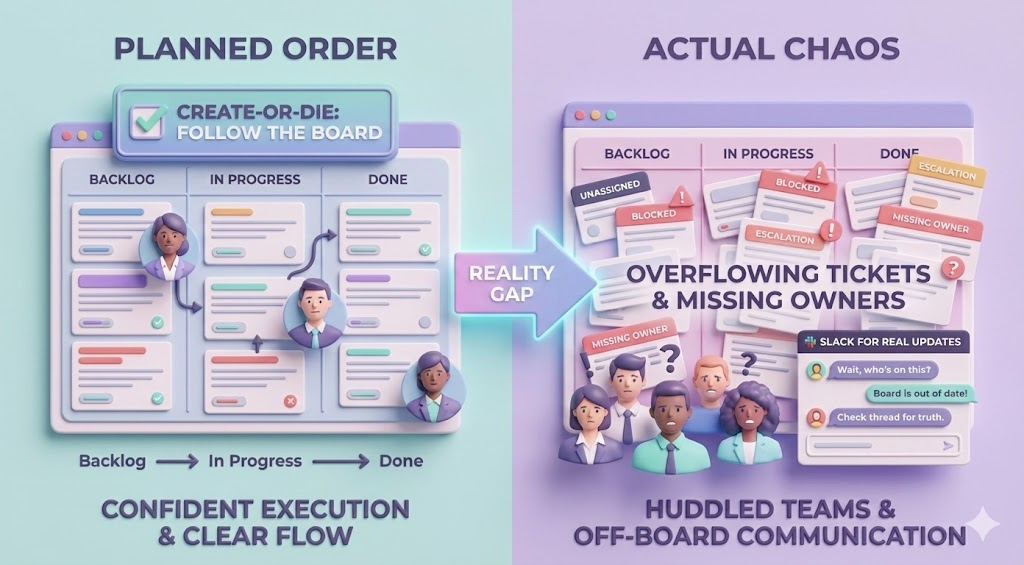
Not because people are lazy. Because the system requires constant busywork:
- Someone asks you something in Slack → You're supposed to create a ticket, copy the thread, add context, set priority, link dependencies, keep it updated as the conversation evolves across three more tools
- You need to execute → You spend 30 minutes hunting down the Slack thread, the email with requirements, the meeting notes where decisions were made
- You want your AI agent to help → You manually reconstruct all that context into a prompt, the agent asks clarifying questions you already answered in Slack last week
So people stop. The "official" board becomes a graveyard. The real work lives in Slack DMs, half-remembered meeting notes, and your mental model that you rebuild every morning.
You spend 2+ hours daily being the human integration layer—not because task tools are hard to use, but because they can't see where work starts, can't maintain context across conversations, and can't adapt to different types of work.
The three layers of autonomous Kanban
Layer 1: Planning—work that plans itself
The planning layer captures the messy upstream work that happens BEFORE anything hits a task board: scattered Slack discussions, email threads debating requirements, meeting decisions that change direction, doc comments adding constraints.
HiveBase monitors all of this in real-time across every tool where work actually happens. The AI understands when conversations imply ownership, recognizes when three different tools are discussing the same work, and synthesizes it into coherent, executable tasks.
You never manually create a task:
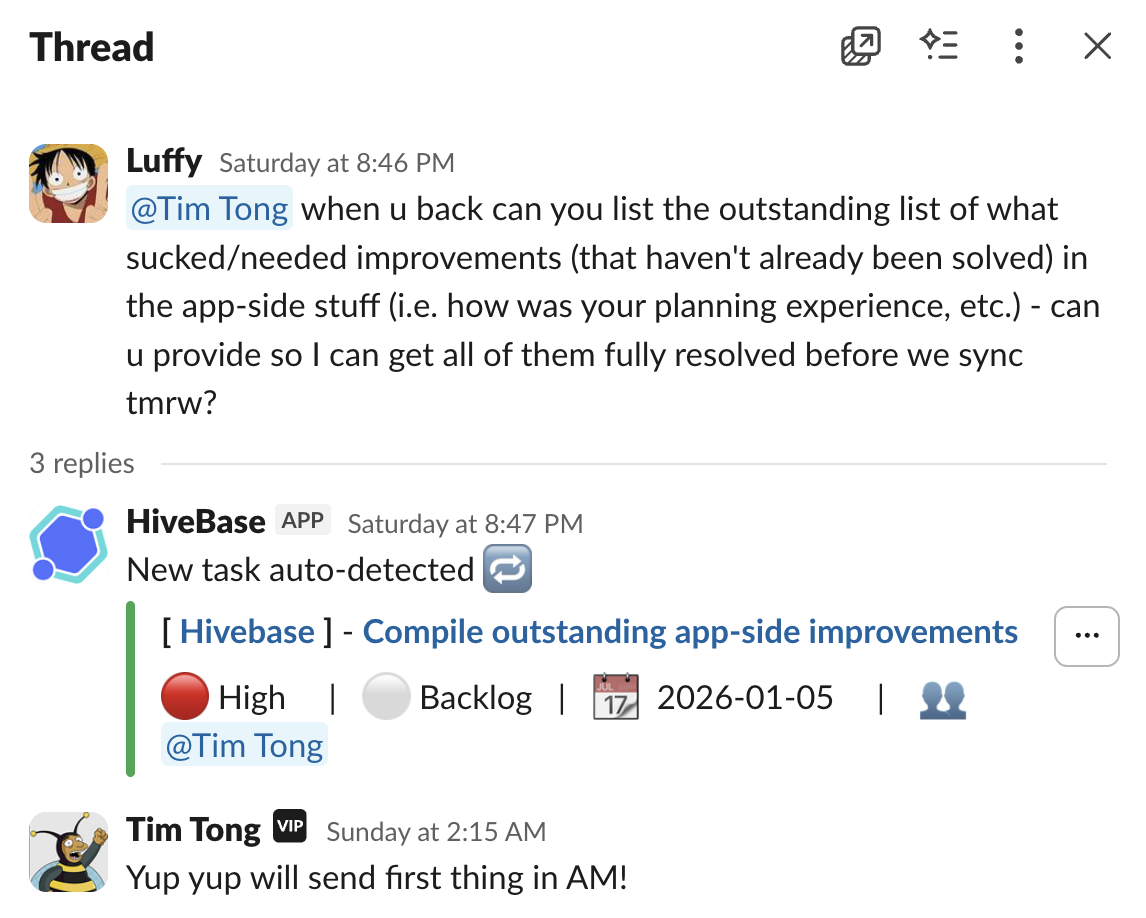
- Slack: Someone @-mentions you with a request → Task auto-created with full thread context
- Email: Thread awaiting your response → Surfaces automatically
- Meetings: "Sarah will send the deck by Friday" → Action item extracted in real-time
- Docs: Comment needs your approval → Appears in your queue
- GitHub: PR assigned 3 days ago → Tracked alongside everything else
Zero manual entry. If someone expects something from you, it shows up.
Smart synthesis, not dumb aggregation:
- Deduplication: Same topic in Slack, email, and Zoom → One task with unified context
- Intent recognition: "Can you?" → AI understands if it's a request, already resolved, or just discussion
- Priority detection: CEO Slack + tight deadline → High priority
- Dependency linking: "Can't ship until Sarah approves" → Tasks automatically connected
- Stale management: No updates in 2 weeks → Auto-archived
Your Kanban board reflects reality because it builds and maintains itself.
This is the layer everyone else is skipping. Most AI orchestration tools assume tasks already exist in a clean, structured format. They don't. They're scattered across Slack, buried in email threads, implied in meeting conversations. Layer 1 eliminates you as the integration layer—the 2+ hours daily you spend being human middleware between your tools and your board.
Layer 2: Context—prompts that write themselves
This is the biggest bottleneck in AI orchestration today—and the reason Kanban boards alone don't solve the problem. Even when your execution layer is perfect, you're still burning 30 minutes per task gathering context before you or an agent can actually execute.
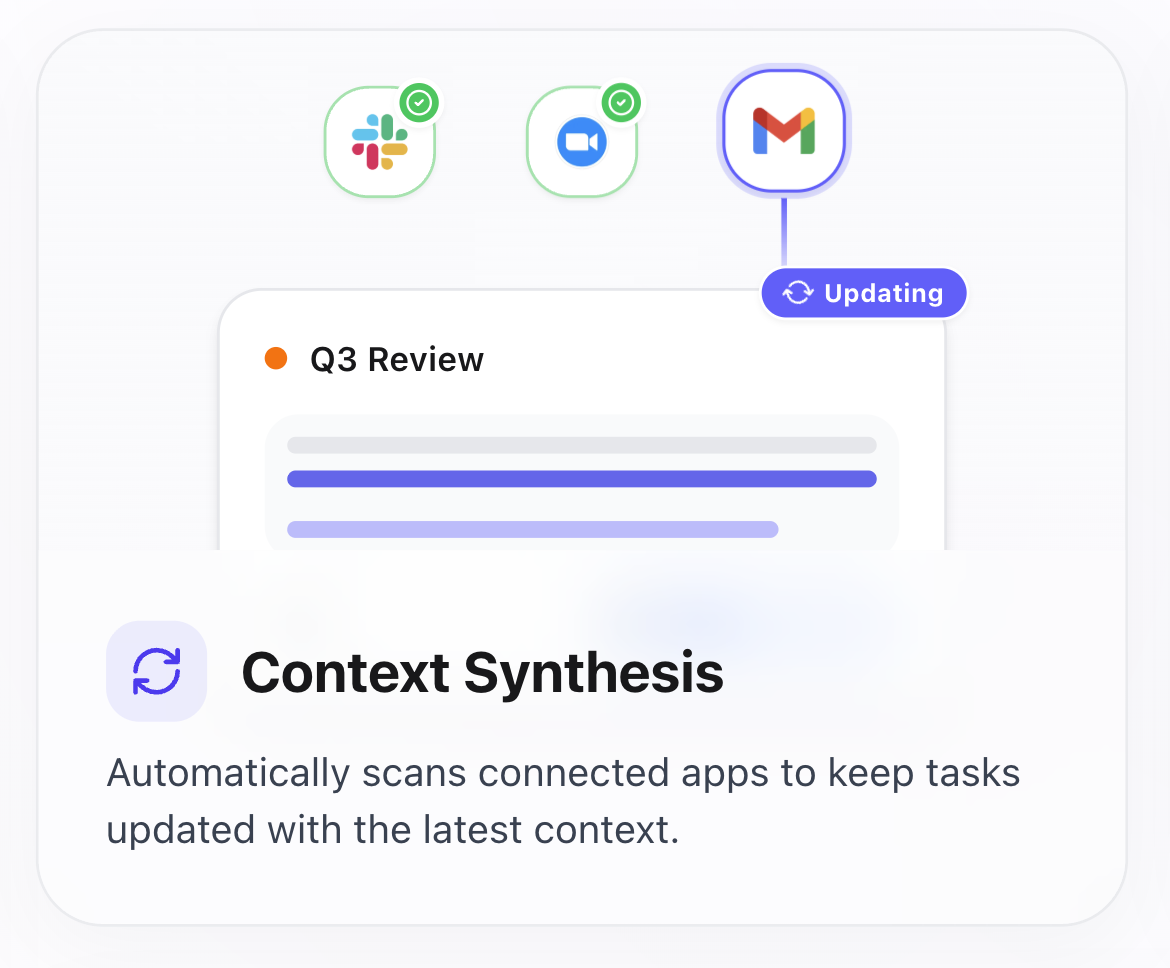
HiveBase maintains living context automatically:
- Monday: Slack thread creates task
- Tuesday: Email adds API spec → Task description enriches itself
- Thursday: Meeting moves deadline → Priority and context update
- Friday: Doc comment adds security constraint → Prompt requirements expand
The task maintains a complete, up-to-date understanding of what needs to happen and why—synthesized from every conversation across every tool.
When you (or an agent) open the task, you're not starting from scratch. You're starting from complete context.
Layer 3: Execution—tasks that know how to get done
Generic text boxes don't work anymore. Different work needs different interfaces.
Some tasks on HiveBase will have a specialized UI based on what needs to happen. Today we're launching with 3 categories—code, content, respond:
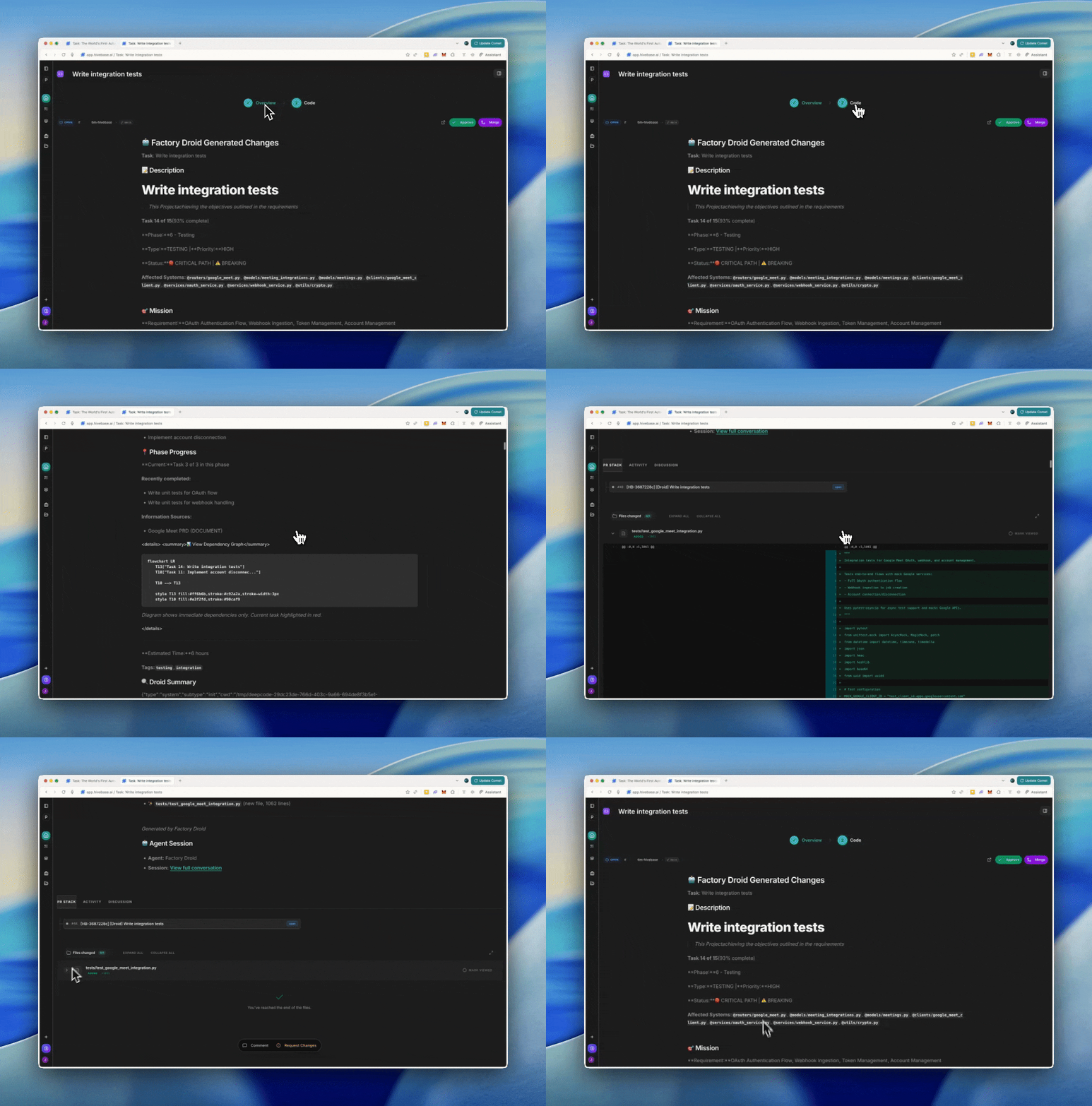
Code tasks
- Opens with synthesized technical requirements from all conversations
- Plan feature with agent (back-and-forth refinement)
- Agent generates code with full context
- Built-in PR review interface
- Push to GitHub with complete commit history
Content tasks
- Starts with context about audience, goals, and constraints from discussions
- Collaborate with agent to build outline
- AI-assisted content generation and revision
- Built-in editor with suggestions
- One-click share to X, LinkedIn, or blog
Respond tasks
- Auto-detected from Slack threads or email chains needing your response
- Full conversation history surfaced with auto-generated diagrams when helpful
- AI drafts response based on your communication style + complete context
- Review, edit, and send—or approve and let HiveBase send
The vision: a unique execution UI for every category of work. Data analysis tasks with built-in visualization tools. Slide deck tasks with presentation builders. Research tasks with source aggregation.
Works with your existing stack
Already using Linear, Asana, or ClickUp? Keep it. HiveBase auto-captures the tasks your team forgets, enriches them with cross-tool context, then pushes them to your official board with one click.
Running AI coding agents? HiveBase becomes your upstream planning system—product discussions get synthesized into requirements with complete context, tasks decomposed into executable subtasks, agents execute with full background.
The moment it clicks 🤯
First time you open a task after a morning of meetings:
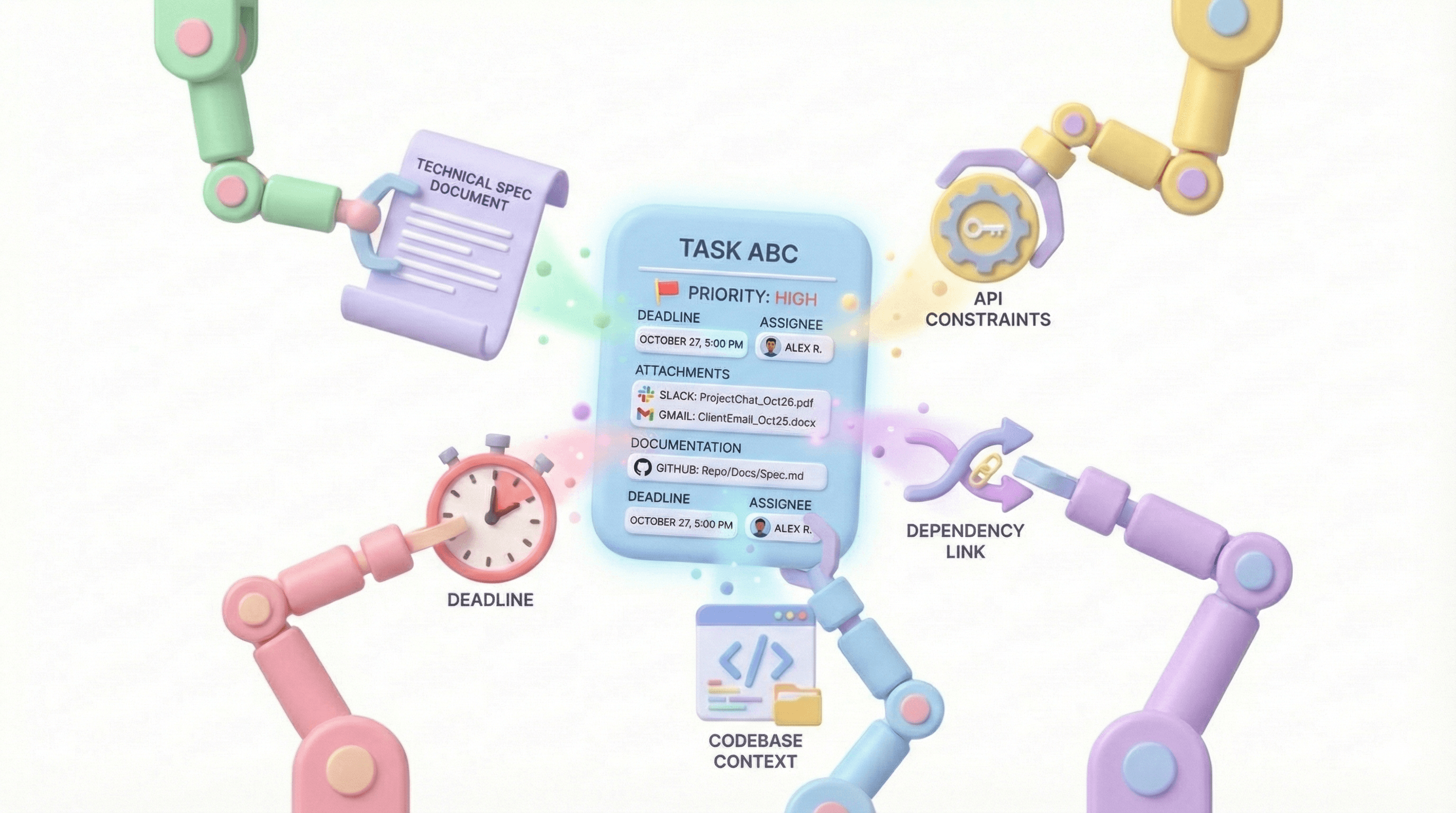
"This Code task already has the full technical spec synthesized from yesterday's Slack thread, the API constraints from this morning's email, the deadline from the standup, and a dependency link to Sarah's security review task. It even has the full context of my codebase! I can just... start coding?"
Or: "This Respond task surfaced the CEO's question, pulled in context from three related conversations, generated a diagram showing our product roadmap, and drafted a response in my voice. I just need to review and send?"
You didn't touch HiveBase to make any of this happen. It just knew.
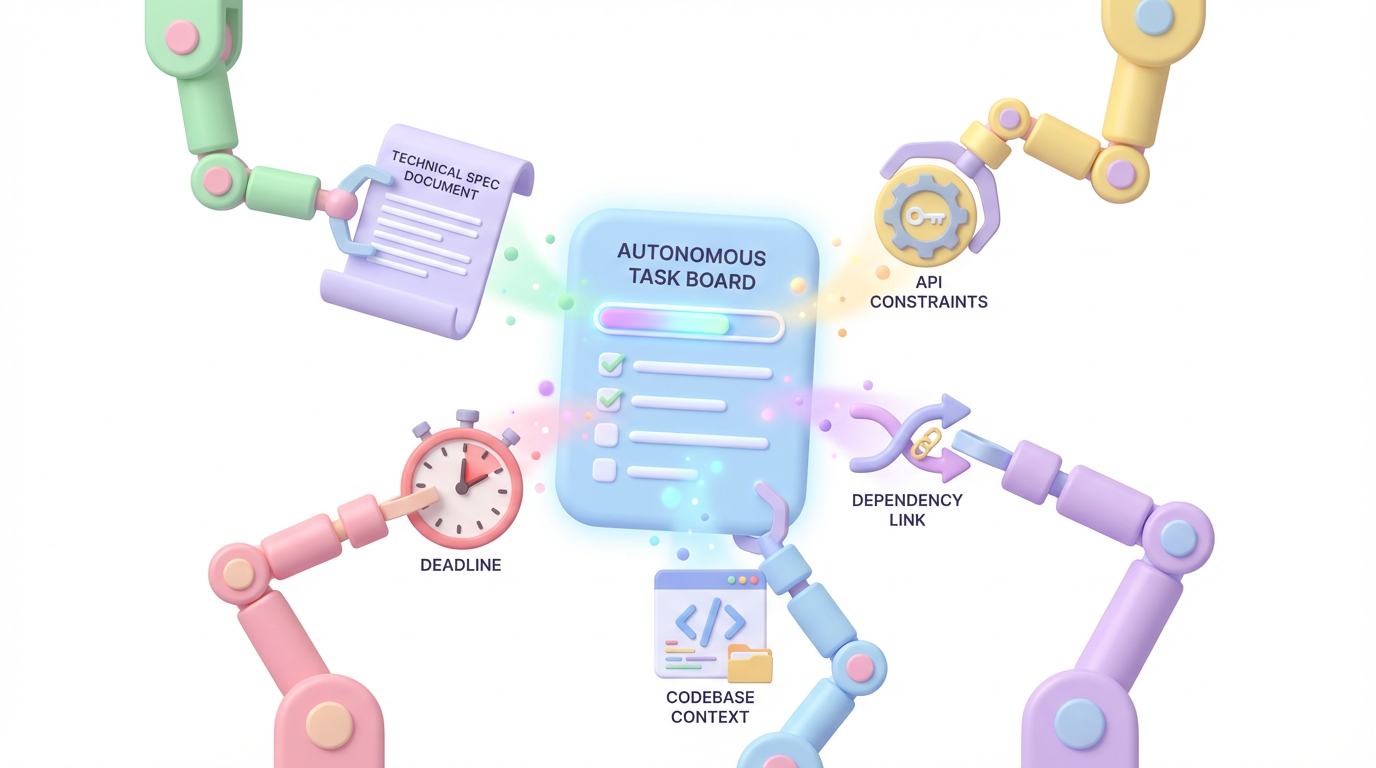
That's autonomous Kanban. Planning that captures itself. Context that maintains itself. Execution interfaces that adapt to the work.
Get started
Home is live for all HiveBase users. Connect your apps—Slack, Gmail, Zoom, Google Docs, GitHub, Linear—and both tabs light up immediately. No setup, no migration.
The manual version—you as the planning layer, the context synthesizer, the human API between your tools—will feel as absurd as managing git branches with sticky notes.
Not because AI is magic. Because once software can plan, maintain context, and execute across your entire stack, there's no reason YOU should be doing any of those jobs anymore.
The teams that automate both layers—not just execution—will have an unfair advantage. Not because they work faster. Because they stop being the bottleneck. Because while everyone else is still playing human middleware, they're focused on the decisions that actually matter.
That's what autonomous means.